
You have probably already pictured the finished result.
A delicate gold ring around your helix. That small hoop in your nostril. A fitted ring framing your conch perfectly.
Rings are timeless, versatile and easy to fall in love with. So it makes complete sense that many clients would like to wear one from the moment their piercing is placed.
But the jewellery that creates your ideal finished look is not always the jewellery that gives a fresh piercing the calmest start.
A fresh piercing needs time, space and stability. The body must form new tissue around the jewellery while also dealing with swelling, movement and everyday contact. During this stage, the shape and fit of the jewellery can make a meaningful difference.
Does that mean a fresh piercing should never be placed with a ring?
No.
Some piercings can safely begin with a correctly selected ring. But it has to be the right piercing, the right anatomy, the right person and, perhaps most importantly, the right ring.
For many popular ear and facial piercings, a professionally fitted stud provides a quieter and more predictable healing environment. The ring can then be added once the piercing is ready for it.
Let’s look at why.
The Short Answer
A ring generally introduces more movement and curvature than a fitted stud.
Fresh piercings also need room for initial swelling. With a stud, your piercer can usually create that space by selecting a slightly longer post. Once the swelling comes down, the post can be shortened during a professional downsize.
With a ring, the entire diameter must be large enough to accommodate swelling. This often means starting with a ring that is noticeably larger than the close-fitting jewellery you imagined.
That larger diameter gives the tissue room, but it can also make the jewellery move, rotate and catch more easily.
Lynn Loheide explains that clients often imagine a delicate, fitted hoop, while the ring required for initial healing may need to be considerably larger and thicker. A snug ring may not leave enough swelling room, while a correctly sized starter ring can be more mobile and require greater care during healing. [lynnloheide.com]
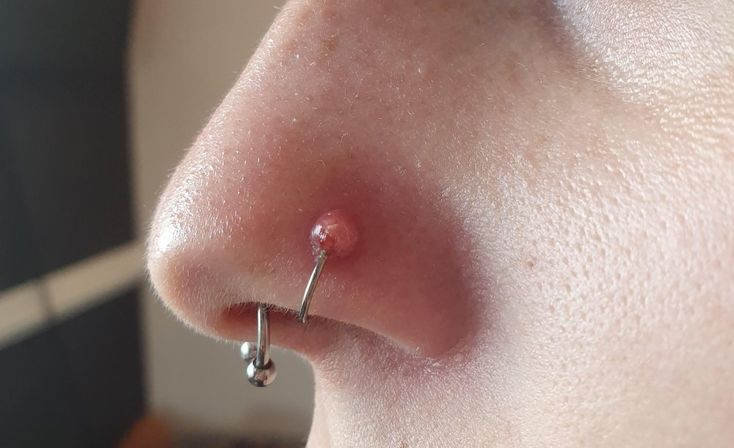
So instead of asking:
Can this piercing be done with a ring?
A more useful question is:
Which initial jewellery gives this particular piercing the best chance of healing well?
That answer will not be identical for every person or every placement.
Your Piercing Is Healing Around the Jewellery
A fresh piercing is a wound with jewellery inside it.
The body must build and stabilise tissue around that jewellery, eventually forming a piercing channel. Lynn Loheide describes this as the development of a fistula, a tube of tissue formed around the jewellery during healing. [lynnloheide.com]
That early tissue is delicate.
It does not benefit from jewellery being twisted, repeatedly pushed or pulled through the channel. It needs as much consistency as possible while the body does the actual work of healing.
The jewellery therefore has a practical job. It must:
- Leave enough space for initial swelling
- Suit the direction of the piercing channel
- Remain secure
- Be smooth and suitable for internal wear
- Avoid unnecessary pressure
- Limit avoidable movement and snagging
A beautiful piece of jewellery is still important, but appearance cannot be the only consideration during initial healing.
The Association of Professional Piercers, or APP, explicitly states that the size, style, material and quality of initial jewellery can affect the body’s ability to heal. It also notes that rings suit some placements, straight or curved bars suit others, and specialist jewellery is appropriate for certain locations. [safepiercing.org]
This is why professional jewellery selection is never simply a choice between “pretty” and “boring”. It is about choosing the most suitable shape for the anatomy and stage of healing.
Fresh Piercings Need Room to Swell
Some swelling is expected after a piercing.
The starter jewellery should allow for that response without placing unnecessary pressure on the tissue. Jewellery that becomes tight can press into the skin or begin to embed.
The APP explains that jewellery that is too tight may interfere with circulation and the release of normal wound secretions. Jewellery that is too large can create different problems, including catching and excessive trauma. [safepiercing.org]
With a stud, swelling space can commonly be created by using a longer post.
With a ring, swelling space generally requires a larger diameter. That changes the entire size and appearance of the jewellery.
Imagine the small fitted ring you eventually want around a conch or helix. It may sit beautifully against the anatomy once the piercing is healed. Place that same close-fitting ring around swollen tissue, however, and there may be nowhere for the swelling to go.
A healing ring therefore needs to be larger.
The result may be safe and appropriate, but it probably will not resemble the snug final look you had in mind.
The Problem With a Ring That Is Too Small
A ring that fits closely around a fresh piercing may:
- Place pressure on swollen tissue
- Create tension at the entry and exit points
- Restrict the available healing space
- Become difficult to clean around
- Press against the edge of the anatomy
- Contribute to irritation
This is why choosing a smaller ring purely for appearance can be a poor compromise.
A professional piercer will usually prioritise enough space over an immediately fitted aesthetic.
The Problem With a Ring That Is Large Enough
Giving the piercing more space solves one issue but introduces another.
A larger ring can move more.
It may rotate as you sleep, wash your hair, change clothes or use a towel. It can catch on hair, headphones, glasses or bedding. When it is bumped, its diameter can create leverage against the piercing channel.
Again, none of this means that healing with a ring is impossible.
It means that choosing a ring involves a different set of healing considerations.
Lynn Loheide notes that larger rings have more freedom to move and can be easier to catch or snag. This is part of the practical reality clients should understand when deciding whether to begin with a hoop. [lynnloheide.com]
A stud can often provide a lower-profile alternative, particularly in placements regularly exposed to pressure or contact.
Movement Matters More Than Many People Realise
Healing is not usually disrupted by one dramatic event.
More often, it is the small things happening repeatedly.
The piercing rubs against the pillow every night. Hair wraps around the jewellery. A towel catches the ring after every shower. Headphones press against the ear during the working day.
Each moment may seem insignificant, but the tissue experiences the combined effect.
Repeated movement and pressure can contribute to:
- Persistent tenderness
- Recurrent swelling
- Irritation bumps
- Delayed healing
- Changes in jewellery position
- Changes to the visible piercing angle
The APP Benelux advises clients to minimise pressure during healing, keep bedding clean and remember that a piercing can appear healed externally while the internal tissue remains fragile. [appbenelux.org]
For ear piercings, sleep is particularly important. Several hours of pressure each night can keep a piercing irritated even when it feels relatively calm during the day.
If you are healing a new ear piercing:
- Sleep on the opposite side
- Consider using a clean piercing or travel pillow
- Keep hair away from the jewellery
- Change bedding regularly
- Avoid headphones that press against the placement
- Be careful with towels, hats and clothing
You can find more practical healing advice in the Dodeka piercing aftercare guide. Dodeka Ink advises clients not to sleep directly on a healing piercing, not to move the jewellery unnecessarily and to return for professional downsizing where appropriate. [dodeka.ink]
Not Every Ring Is the Same
“Ring” sounds like one jewellery category, but it includes many different designs.
Examples include:
- Captive bead rings
- Fixed bead rings
- Segment rings
- Clickers
- Seam rings
- Decorative rings
Every style has its own construction and closure.
That matters because part of the ring may rotate through the piercing channel during healing.
Why Plain Seam Rings Are a Problem
A plain seam ring is opened and closed by gently twisting the two ends. When closed, a small seam remains where those ends meet.
In a healed piercing, a high-quality seam ring can be a beautiful and secure choice.
In a fresh piercing, the seam may rotate through the healing channel. Even a well-made ring still has a meeting point between the ends, and that area can disturb developing tissue.
Lynn Loheide advises that plain seam rings should not be used in fresh piercings for this reason. Some decorative seam-ring designs may prevent the seam from travelling through the channel, but suitability must still be assessed for the individual piercing. [lynnloheide.com]
So when you ask whether a piercing can start with a ring, your piercer also needs to consider:
- The ring style
- Its closure mechanism
- Its diameter
- Its thickness
- Whether any seam can enter the channel
- The material and surface finish
- The amount of expected movement
- Whether the design has enough swelling room
A ring that performs beautifully after healing may not belong in a fresh piercing.
Jewellery Quality Is Just as Important as Jewellery Shape
A stud is not automatically suitable simply because it is a stud.
Poor-quality jewellery can cause problems regardless of its shape.
Initial jewellery should be smooth, secure and compatible with the body. The APP states that surfaces should be free from scratches, burrs and polishing compounds. Rough surfaces can disturb newly forming tissue when the jewellery moves. [safepiercing.org], [safepiercing.org]
Internally threaded jewellery keeps the section passing through the tissue smooth because the threading sits inside the post. Threadless jewellery avoids screw threads altogether. Both systems can be suitable when the piece meets appropriate material and manufacturing standards. [safepiercing.org], [safepiercing.org]
A suitable starter piece must therefore be judged on:
- Material
- Surface finish
- Construction
- Thickness
- Length or diameter
- Security
- Placement compatibility
- Anatomy
- Sterilisation suitability
At Dodeka Ink, starter jewellery is selected from implant-grade titanium and solid gold options using internally threaded and threadless systems. The choice is based on anatomy, fit, comfort and long-term wear rather than appearance alone. [dodeka.ink]
The goal is jewellery that looks beautiful while still performing its role during healing.
Why Downsizing Works So Well With Studs
Starter posts are often longer than the final jewellery needs to be.
That initial length gives the tissue space to swell. Once the swelling has reduced, the extra length may cause the post to move, catch or tilt.
That is when downsizing becomes important.
During a downsize appointment, the longer post is replaced with a shorter, better-fitting one. The piercing is still healing, but the jewellery fit is adjusted to create a calmer environment.
A professional downsize can help reduce:
- Excessive movement
- Snagging
- Leverage
- Pressure
- Recurrent irritation
- Changes to the piercing angle
With many threadless and internally threaded pieces, the decorative end can remain while the post is changed. This means you do not necessarily have to give up beautiful jewellery just because the post needs to fit the next healing stage.
Rings cannot be reduced in quite the same way. Choosing a smaller ring changes the entire curve and how that curve interacts with the piercing.
This is one reason why a stud-first approach can provide a practical healing pathway:
- Begin with sufficient swelling space.
- Downsize once the swelling has reduced.
- Allow the piercing to stabilise.
- Introduce a fitted ring after full healing.
The Final Ring Can Be Worth Waiting For
The APP makes an important distinction: the piercing location is fixed, but the jewellery can be changed after successful healing. [safepiercing.org]
That means the initial priority should be establishing the piercing at a suitable angle and giving the tissue the best possible foundation.
The jewellery can evolve.
Starting with a stud does not mean you have abandoned the ring you wanted. It means the final ring is being treated as the destination rather than forced into the beginning of the process.
Waiting also allows your piercer to measure the healed anatomy more accurately. Once swelling has disappeared and the piercing has stabilised, the ring diameter can be selected for a more intentional fit.
The result may be more comfortable and visually balanced than trying to predict the final size on the day of piercing.
Does This Mean Rings Are Never Suitable for Fresh Piercings?
No, and this is where nuance matters.
Some piercings are commonly started with a ring because that shape is appropriate for the placement. Certain clients and anatomies may also heal well with rings in placements where a professional sees no contraindication.
The APP states that rings suit some body areas while straight bars, curved bars or placement-specific jewellery suit others. [safepiercing.org]
Lynn Loheide similarly explains that many piercings can begin with rings when there is the right piercing, person, placement and ring. [lynnloheide.com]
The responsible conclusion is therefore not:
Rings are always bad.
It is:
Rings are not automatically the best initial jewellery simply because they are your preferred final look.
A ring may be appropriate when:
- The placement naturally suits curved jewellery
- The anatomy supports the required diameter
- The ring leaves sufficient swelling room
- The closure cannot damage the channel
- The material and finish are suitable
- The client understands the additional movement
- Daily habits are compatible with healing
- The piercer judges that the setup is appropriate
This is an individual decision, not a universal rule.
Why a Piercer May Recommend a Stud
When a piercer advises against your preferred ring, that advice should come with an explanation.
A stud may be recommended because:
- The ring would need to be much larger than expected
- A fitted ring would leave insufficient swelling room
- The jewellery would move frequently
- The placement is vulnerable to sleeping pressure
- Hair, headphones or clothing may catch the ring
- The requested ring is too thin
- The closure is not suitable for healing tissue
- The anatomy does not support the requested fit
- A stud offers better stability
- The final diameter cannot yet be measured accurately
That recommendation does not dismiss your aesthetic preference.
It protects the foundation needed to create that look later.
Tell your piercer that your goal is eventually to wear a ring. Placement decisions can then take that final jewellery into account.
What About a Fresh Helix Piercing?
A helix is one of the clearest examples of why the finished look and starter jewellery may differ.
Helix piercings are exposed to:
- Hair
- Glasses
- Headphones
- Pillows
- Towels
- Hats
- Helmets
- Clothing
A large starter ring has more opportunity to catch or move. Though a snug ring, however, may not provide enough room for swelling.
A suitable flat-back labret can often offer a lower profile during healing. It still needs sufficient length initially and may require downsizing later, but it generally introduces less rotational movement.
Cartilage also heals slowly. The APP Benelux gives an indicative healing period of six to nine months or longer for cartilage placements such as the helix, tragus, conch, rook and daith. [appbenelux.org]
If the final goal is a fitted helix ring, discuss this before the piercing is placed. The angle and position should support the jewellery you hope to wear after healing.
What About a Fresh Nostril Piercing?
A close-fitting nostril hoop is a popular look, but the tiny ring you eventually want may be too snug for a fresh piercing.
A larger ring can provide swelling room, but that larger diameter can also move and catch more easily.
For many clients, a professionally fitted flat-back labret or another suitable starter design provides a more stable beginning. After healing, the nostril can be measured for a ring that complements both the anatomy and desired appearance.
This is not an absolute rule for every nostril. The correct option depends on the individual circumstances.
What About a Conch Ring?
A fitted conch ring curves around the outer edge of the ear and can create a striking finished look.
During healing, however, the ring needs enough diameter to accommodate both the anatomy and swelling. That can mean wearing a much larger ring than the final close-fitting style.
Lynn Loheide uses the conch as an example when explaining ring healing: the initial ring needs visible room, while a healed conch may later wear a smaller and more fitted piece. [lynnloheide.com]
Starting with a flat-back labret can give the piercing a more contained healing setup. Once the channel is fully stable, the piercer can measure the correct ring diameter.
What If You Already Have a Fresh Piercing With a Ring?
Do not panic.
A piercing that was placed with a ring is not automatically going to fail. The ring may be entirely appropriate for the placement, anatomy and healing plan.
Do not rotate it, remove it or replace it without professional advice.
Instead, pay attention to:
- Whether the ring has enough swelling room
- Whether it feels tight
- Whether the closure rotates into the channel
- Whether it catches frequently
- Whether you are sleeping on it
- Whether irritation is increasing
- Whether the angle appears to be changing
- Whether the jewellery is putting pressure on the tissue
If you are unsure, arrange a piercing check-up.
The APP Benelux advises clients not to force jewellery and to remember that a piercing can appear healed before the internal channel has fully recovered. [appbenelux.org]
You can also review the Dodeka piercing aftercare guide or browse the Dodeka piercing FAQ for additional guidance. [dodeka.ink], [dodeka.ink]
How to Give Any Fresh Piercing a Better Start
Whether your piercing begins with a ring or a stud, the basics remain important.
- Keep your hands away from the jewellery.
- Do not twist or rotate it.
- Avoid sleeping directly on the piercing.
- Reduce pressure and snagging.
- Follow the aftercare advice given by your piercer.
- Do not change jewellery for aesthetic reasons during healing.
- Return for downsizing when advised.
- Contact the studio when jewellery becomes tight or irritating.
- Seek medical advice when infection is suspected.
Lynn Loheide emphasises that the body performs the healing. Aftercare is there to support that process and remove normal debris without repeatedly disturbing the tissue. [lynnloheide.com], [lynnloheide.com]
A complicated routine cannot compensate for constant pressure, unsuitable jewellery or repeated movement.
Sometimes the most helpful thing you can give a piercing is simply calm.
Frequently Asked Questions
Can I choose a ring if I understand the risks?
Your preferences should always be part of the conversation, but the piercer must also judge whether the jewellery is suitable for the placement and anatomy.
If the requested ring is too small, too thin, incorrectly constructed or unsuitable for healing tissue, a professional may recommend an alternative.
Does a ring always cause piercing bumps?
No.
Piercing bumps can result from many different factors, including pressure, movement, unsuitable jewellery fit, sleeping habits, placement angle and aftercare.
However, a ring that is too tight, rotates excessively or catches repeatedly can contribute to ongoing irritation.
Is a stud guaranteed to heal perfectly?
No.
A stud can also be problematic when it is too short, excessively long, poorly finished or made from an unsuitable material.
Shape is only one part of jewellery selection. Fit, material, quality, placement and anatomy also matter.
When can I change my stud to a ring?
Wait until the piercing is fully healed and stable.
A piercing may feel comfortable before the internal tissue is ready for a different jewellery shape. The APP Benelux advises using the condition of the piercing rather than the calendar alone to determine readiness. [appbenelux.org]
Have the piercing checked before the first change.
Can I change to a ring during my downsize?
Usually, downsizing is a fit adjustment rather than an aesthetic jewellery change.
The original longer post is replaced with a shorter post while the piercing continues healing. Changing to a ring introduces a new curve and movement pattern.
Whether that is appropriate depends on the placement and stage of healing.
Can a seam ring be worn in a new piercing?
Lynn Loheide advises against plain seam rings in fresh piercings because the seam can rotate through the healing channel. Some decorative seam-ring designs may prevent the seam from entering the piercing, but suitability must still be professionally assessed. [lynnloheide.com]
Your Ring Is the Goal, Not Always the Starting Point
The desire for a ring is completely understandable.
A delicate ring can look beautiful, frame the anatomy and make a piercing feel immediately complete.
But healing jewellery has a different purpose.
The initial piece needs to accommodate swelling, support the piercing angle, minimise avoidable movement and remain compatible with delicate new tissue.
For many piercings, a properly fitted stud offers the calmer beginning. The post can be downsized as swelling reduces, while the tissue continues developing around a stable piece of jewellery.
Once the piercing is fully healed, the ring can be selected for the fit and look you originally imagined.
For some placements and anatomies, a professional may determine that the right ring is suitable from the beginning.
The best answer is therefore not always “stud” or always “ring”.
It is the jewellery that makes sense for:
- Your anatomy
- Your placement
- Your lifestyle
- Your preferred final look
- Your current stage of healing
That is what thoughtful piercing should look like.
Ready to Plan Your Piercing?
At Dodeka Ink in Tilburg, every piercing appointment includes an anatomy assessment, placement advice and personalised jewellery guidance. The goal is not only to create a piercing that looks beautiful when you leave the studio, but to give the piercing a considered foundation for long-term wear. [dodeka.ink]
Book your piercing appointment and let us help you choose the placement and jewellery that best suit your anatomy, style and healing needs. [dodeka.ink]
You can also: